

ERV vs. HRV
Creating a comfortable and healthy home goes beyond heating and cooling. It is about fresh, clean air. Modern construction techniques and materials create a more continuous and well-sealed building envelope, preventing unwanted air from entering or escaping, primarily by creating an airtight thermal envelope using insulation, air-sealing techniques, and high-quality windows to minimize heat transfer and air leakage. This airtight construction helps support comfortable indoor temperatures, improves health through better ventilation, and significantly lowers energy bills by reducing the energy needed for heating and cooling. But this can trap stale air indoors.
Energy Recovery Ventilator
ERVs are a type of HRV that can exchange both heat and moisture. It can give you more control over moisture levels in your home during warm and humid weather, which could be important in our climate. During the cooling season, ERVs help keep excess moisture out of your home by allowing it to pass through the HRV core. The incoming moist air then transfers the moisture to the outgoing exhaust air. Because less energy needed to lower the temperature of dry air compared to moist air, it can reduce the load on your air conditioner and save you money.
Heat Recovery Ventilator
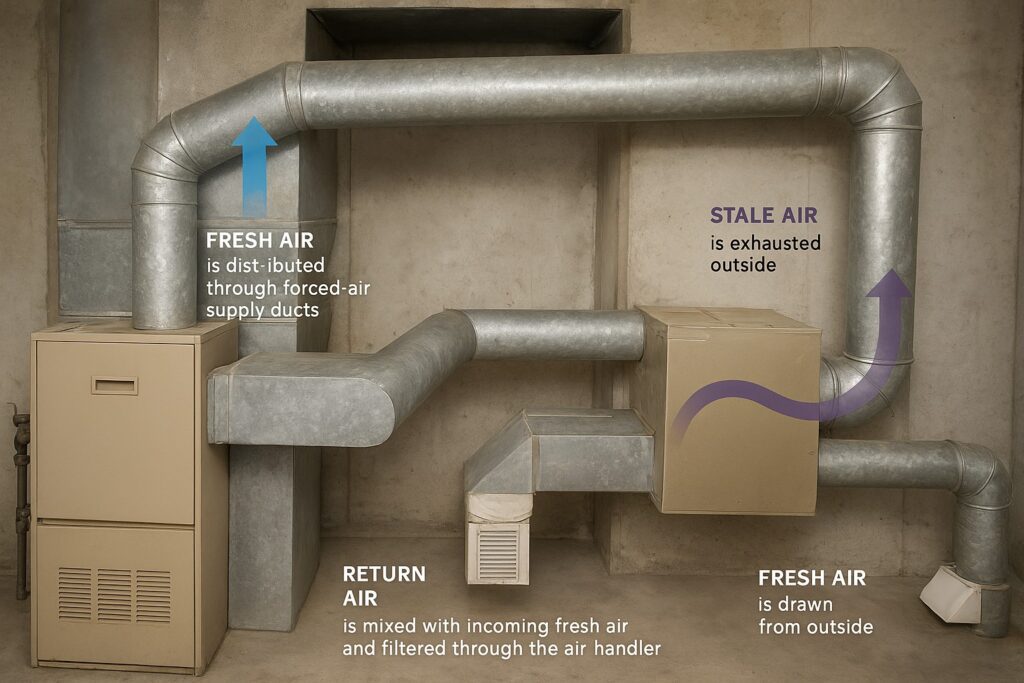
A Heat Recovery Ventilator (HRV) is a mechanical ventilation system designed to make your home healthier, cleaner, and more comfortable. It works by continuously replacing stale indoor air with fresh outdoor air, ensuring a constant flow of clean air throughout your living space. What sets HRVs apart from other ventilation systems is their ability to transfer heat between the outgoing and incoming air streams. This process reduces the energy cost of heating or cooling the fresh air brought into your home. Often referred to as air-to-air heat ex-changers, HRVs preheat or pre-cool incoming air using the exhaust air, improving both comfort and efficiency.
During the heating season, the HRV captures heat from the outgoing air and uses it to preheat the incoming fresh air. During the cooling season, an HRV can reverse this heat-exchange process, removing the heat from the incoming air and transferring it to the outgoing air. By finding and reducing the sources of indoor air pollution, you can limit most common household pollutants. Still, no matter how cautious you are, a trace of pollutants will always remain—making proper ventilation essential.
"COMFORT STARTS HERE"
Choosing the right ventilation system can dramatically improve your home’s comfort, energy efficiency, and indoor air quality. An HRV is ideal for cold climates, while an ERV is perfect for humid or mixed climates. Both options provide fresh air and reduced energy costs, making them a smart investment for any family home.
📞 Call John’s Home Comfort at 416-881-5425 today to schedule a consultation and discover how an ERV or HRV system can improve your family home comfort. Servicing, Toronto, Richmond Hill, Vaughan, Etobicoke, Mississauga and more.